

Artist brand identity is the unique, recognizable pattern of sound, visuals, and messaging that shapes how fans perceive and remember a musician. It is not a logo or a single album cover. It is the consistent pattern across sound, story, values, and communication that audiences experience every time they encounter your name. Artists like Billie Eilish and Kendrick Lamar do not just release music. They project a complete, coherent identity that fans recognize before a single note plays. Understanding what artist brand identity means, and how to build one deliberately, is the difference between being heard once and being remembered for years.
What is artist brand identity and why does it matter?
Artist brand identity is the sum of every signal you send to the world as a musician. Your brand is what listeners recognize before they even remember your name. That recognition is built through repetition across every fan-facing touchpoint: your music, your artwork, your social media captions, your live performance energy, and even how you respond to comments. Each of these signals either reinforces or undermines a coherent identity.
The importance of artist branding goes beyond aesthetics. A strong identity creates social currency for your fans. When someone wears your merch or shares your post, they are expressing something about themselves. Strong artist brands give fans a way to signal taste and belonging without needing an explanation. That emotional investment drives loyalty, repeat streams, and real monetization.

Artists who treat branding as an afterthought tend to plateau. Their releases feel disconnected, their social media looks inconsistent, and new listeners cannot form a clear impression. Building a personal brand as an artist is not vanity. It is the infrastructure that makes your music career sustainable.
What are the essential elements of artist brand identity?
A complete artist brand identity operates across three distinct layers: sonic, visual, and verbal. Each layer carries meaning on its own, but the real power comes from their alignment.
| Brand layer | What it includes | Why it matters |
|---|---|---|
| Sonic identity | Production style, emotional register, tempo, instrumentation | The foundation everything else must reflect |
| Visual identity | Album art, logos, social media aesthetics, stage design, personal style | Often the first thing a new listener encounters |
| Verbal identity | Artist bio, captions, interview tone, social media voice | Communicates values and personality in words |
Sonic identity is foundational, and coherence is achieved through repeated recognition over time rather than through polished isolated assets. Your visual and verbal choices must feel like natural extensions of your sound. When they do not, fans sense the disconnect immediately.
Visual identity goes deeper than a logo. It includes the color palette you use consistently on Instagram, the mood of your press photos, the typography on your merch, and the lighting at your shows. Verbal identity covers the way you write your bio on Spotify, the tone of your TikTok captions, and how you speak in interviews. All three layers must tell the same story.
Pro Tip: Run a quick coherence test. Pull up your Spotify artist page, your Instagram grid, and your most recent YouTube thumbnail side by side. Ask yourself: do these three things feel like they belong to the same artist? If the answer is no, you have found your starting point.
How does consistent branding build recognition and emotional connection?
Recognition is not built in a single release. It accumulates across dozens of touchpoints over months and years. Each release cycle should reinforce prior signals rather than reset them. Artists who rebrand completely with every project force fans to re-learn who they are, which slows the growth of genuine loyalty.
Think about what happens when a fan discovers you through a TikTok clip. They tap your profile, check your bio, scroll your grid, and click through to your Spotify page. At each step, they are forming an impression. If your TikTok aesthetic is dark and cinematic but your Spotify header looks like a different artist entirely, that impression fractures. Consistent branding across these steps creates a smooth discovery experience that converts casual listeners into followers.
Here is what consistency across touchpoints actually looks like in practice:
- Release artwork that shares a visual language across your catalog
- A social media grid with a recognizable color palette and photo style
- Captions and bios written in the same voice and tone
- Live show visuals and merch that echo your album art
- Video thumbnails on YouTube that match your overall aesthetic
The psychological effect of this consistency is significant. Fans begin to associate specific feelings with your brand. Branding gives fans a way to express identity and belonging, which deepens their emotional investment in your career. That emotional connection is what separates artists with passive listeners from artists with devoted communities.
What practical steps can musicians take to create their brand?
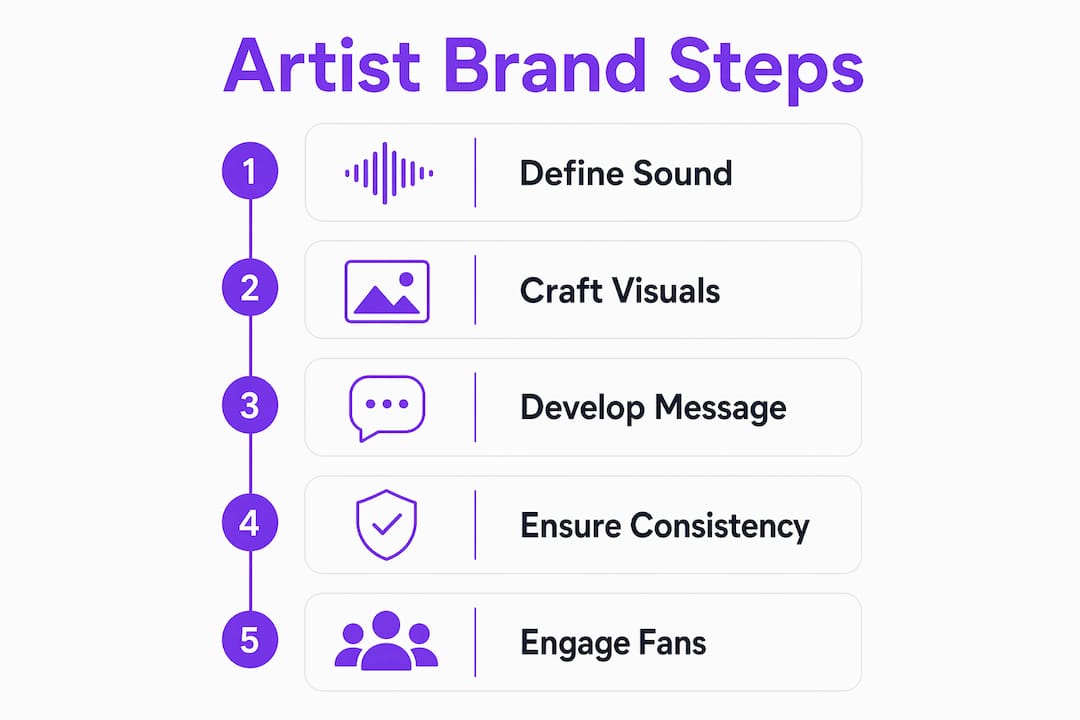
Building a personal brand as an artist follows a specific sequence. Starting in the wrong order, particularly by designing visuals before clarifying your identity, produces branding that feels manufactured rather than inevitable.
- Define your sonic foundation. Before anything else, identify the emotional register of your music. Is it melancholic and introspective? High-energy and defiant? Your sound is the anchor for every other decision.
- Clarify your values and point of view. What do you stand for? What themes run through your lyrics and your life? Artists like Kendrick Lamar built careers on a clearly articulated worldview, not just a sound.
- Identify your audience. Who connects most deeply with your music? Understanding your listeners helps you make branding decisions that resonate rather than alienate.
- Develop your visual identity. Once your sonic and values foundation is clear, build visuals that reflect it naturally. Visuals must flow naturally from sound, values, and audience. Hire a photographer or designer who understands your music, not just your preferred color.
- Craft your verbal identity. Write an artist bio that captures your story and your sound in plain language. Develop a consistent voice for your social media captions. Your words should sound like your music feels.
- Maintain coherence across releases. Branding is a long-term process, not a one-off campaign. Every release is an opportunity to reinforce your identity, not reinvent it.
The most common mistake in artist brand development is skipping steps one through three and jumping straight to logo design. A logo built without a clear identity foundation will feel hollow, and you will likely redesign it within a year anyway.
Pro Tip: Your brand can evolve as your career grows. You can change genres or themes and still maintain a recognizable point of view, emotional register, or production sensibility. Evolution is healthy. Erasure is not.
How do visual identity and social media shape your brand in the streaming era?
In the streaming era, listeners often encounter visual touchpoints before they hear the music. A potential fan might see your thumbnail on YouTube, your post on Instagram, or your profile on Apple Music before they ever press play. That means your visual identity is doing the first and most critical job of your brand: creating enough curiosity to earn a listen.
Billie Eilish built a visual identity around oversized clothing, neon green hair, and a specific moodboard aesthetic before she was a household name. That visual consistency made her instantly recognizable across every platform, from Spotify to YouTube to merch tables. Kanye West's album rollouts, particularly for projects like My Beautiful Dark Twisted Fantasy, treated visual art as inseparable from the music itself. These are not accidents. They are deliberate artist branding strategies.
Social media platforms each have their own visual grammar. Instagram rewards a cohesive grid aesthetic. TikTok rewards personality and authenticity in short clips. YouTube rewards consistent thumbnail design and channel branding. The artists who grow fastest on these platforms are not necessarily the most talented. They are the most visually coherent.
Fans quickly detect forced or disconnected branding. If your visual identity feels like it was assembled from a mood board you found on Pinterest rather than drawn from your actual music and personality, audiences will sense it. Authenticity in visual branding is not about being raw or unpolished. It is about making choices that feel true to your sound and your story.
Platform tools like YouTube for Artists and Apple Music for Artists give you direct control over how your brand appears in those ecosystems. Use them. Your Spotify artist bio, your Apple Music artist image, and your YouTube channel art are all brand touchpoints that many artists neglect entirely.
Key takeaways
Artist brand identity is the coherent pattern of sonic, visual, and verbal signals that makes a musician recognizable and emotionally meaningful to fans across every touchpoint.
| Point | Details |
|---|---|
| Brand identity is a pattern, not a logo | It spans sound, visuals, story, and messaging across every fan-facing channel. |
| Sonic identity is the foundation | Build visual and verbal identity after clarifying your sound and values, not before. |
| Consistency drives recognition | Each release cycle should reinforce prior signals; resets slow loyalty growth. |
| Authenticity beats polish | Fans detect forced branding; visuals must evolve naturally from your music. |
| Social media is a brand channel | Platforms like Instagram, TikTok, and YouTube are where first impressions form before a listen. |
Why most artists get branding backwards
I have worked with enough musicians to see the same pattern repeat itself. An artist spends weeks designing a logo, picks a color palette from a design app, and launches a social media presence that looks professional but feels empty. Six months later, they wonder why their streams are flat and their follower count has stalled.
The problem is not the logo. The problem is that the logo came first. Branding built on top of an unclear identity is just decoration. It does not communicate anything real, and fans can tell the difference between an artist who has something to say and one who is performing the idea of having something to say.
The artists I have seen build genuine, lasting brands all started from the same place: their music and their values. They asked hard questions about what their sound actually communicates, who it is for, and what they want listeners to feel. The visuals and the social presence came later, and when they did, they felt inevitable rather than manufactured.
The other mistake I see constantly is treating branding as a one-time project. You do not brand yourself once and move on. Every release, every post, every interview is either reinforcing or eroding the identity you are building. The artists who grow consistently are the ones who treat every fan-facing moment as a brand decision. That discipline is what separates a career from a moment.
— Eric
How Ampwave helps you build your artist brand
Ampwave is built specifically for musicians who want to grow their audience and increase streams through smarter brand positioning and site design. If you have read this far and realized your brand identity needs work, the next step is putting the right infrastructure behind it. Ampwave connects artist brand development with real audience growth strategies, so your identity does not just look good. It performs. Whether you are starting from scratch or refining an existing presence, explore what Ampwave offers and see how your brand can start working harder for your music career.
FAQ
What is artist brand identity in simple terms?
Artist brand identity is the recognizable pattern of sound, visuals, and messaging that defines how fans perceive a musician. It spans every touchpoint from album art to social media captions to live performance energy.
What are the core elements of brand identity for musicians?
The three core elements are sonic identity (your sound and emotional register), visual identity (album art, social media aesthetics, logos, and style), and verbal identity (your bio, captions, and tone). All three must align to create a coherent brand.
Why is consistency so important in artist branding?
Consistency builds accumulated recognition over time. Each release cycle that reinforces prior signals deepens fan familiarity and trust, while brand resets force listeners to re-learn who you are and slow loyalty growth.
Should I start with visuals when building my artist brand?
No. Start with your sonic identity, values, and audience before creating any visuals. Visuals designed without a clear identity foundation tend to feel manufactured, and artists typically end up redesigning them within a year.
How does social media affect artist brand identity?
Social media is often where new listeners form their first impression of an artist, before they hear a single song. Consistent visual and verbal branding across Instagram, TikTok, and YouTube converts casual browsers into genuine fans.